
Description
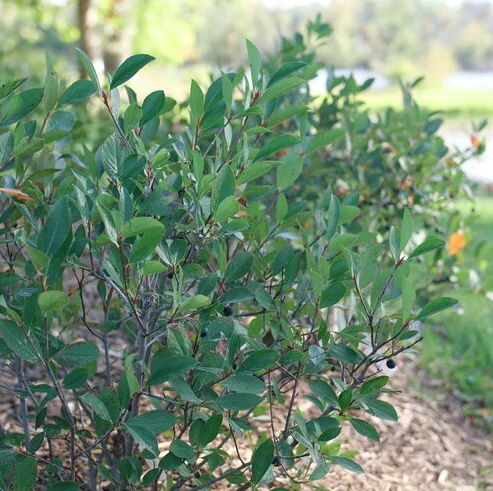
A mid-sized native shrub that benefits wildlife and beautifies the garden.
You don’t have to sacrifice beauty to grow a garden with native plants. Low Scape Snowfire aronia has all the flower power of a typical garden plant, but still supports local pollinators and wildlife. It is blanketed in little white flowers in the springtime, to the delight of busy pollinators. This flurry of blooms complements most perennials, shrubs, and annuals. In summer it blends in, making a great backdrop for summer bloomers, but by autumn it’s ready to shine again with bright red foliage and dark blue fruits. You can plant this versatile native in practically any condition; warm and cool climates, wet and dry soil, and full sun to part sun.
Top three reasons to grow Low Scape Snowfire aronia:
– Mounded habit, perfect for the middle of the border or informal low hedges
– Tolerates a wide range of growing conditions
– White flowers in spring and dark purple fruit and brilliant fall foliage
Produces BerriesFall InterestHeat TolerantDeadheading Not NecessaryDrought TolerantSalt TolerantErosion ControlBog PlantAttracts: BeesButterfliesNative to North America
Characteristics
Plant Type:Shrub Shrub Type:Deciduous Height Category:Medium Garden Height:48 – 72 Inches 1.2m – 1.8m Spacing:36 – 48 Inches 91cm – 1.2m Spread:36 – 48 Inches 91cm – 1.2m Flower Colors:White Flower Shade:White Foliage Colors:Green Foliage Shade:Green Habit:Mounded Container Role:Filler
Plant Needs
Light Requirement:Part Sun to SunSun
The optimum amount of sun or shade each plant needs to thrive: Full Sun (6+ hours), Part Sun (4-6 hours), Full Shade (up to 4 hours).
Maintenance Category:EasyBlooms On:Old WoodBloom Time:Mid SpringHardiness Zones:3a, 3b, 4a, 4b, 5a, 5b, 6a, 6b, 7a, 7b, 8a, 8b, 9aWater Category:AverageSoil Fertility Requirement:Average SoilSoil PH Category:Alkaline SoilNeutral SoilUses:Border PlantContainerEdging PlantGroundcoverLandscapeLawn SubstituteMass PlantingUses Notes:
Its versatile, mid-sized habit suits it perfectly as a hedge, foundation planting, or as a feature in bird and native gardens.
Maintenance Notes:
Aronia is one of the toughest, most durable shrubs, and needs little care. If you wish to prune, the best time is immediately after it blooms. However, be aware that this will remove the potential for any fruit to form. Wondering about deer resistance? It varies. We have found that in areas with heavy deer or rabbit activity, they may eat the flower buds in early spring, when food supplies are scarce. However, they do not typically continue browsing aronia after that, so are unlikely to cause severe or disfiguring damage to the plant itself.
Fun Facts:
Aronia’s common name, chokeberry, comes from the extremely astringent taste of the fruit.
This item qualifies for our flat-rate shipping. Feel free to add more items—your shipping cost will stay the same. Some exclusions may apply, we reserve the right to limit quantities.
Reviews
There are no reviews yet.