
Description
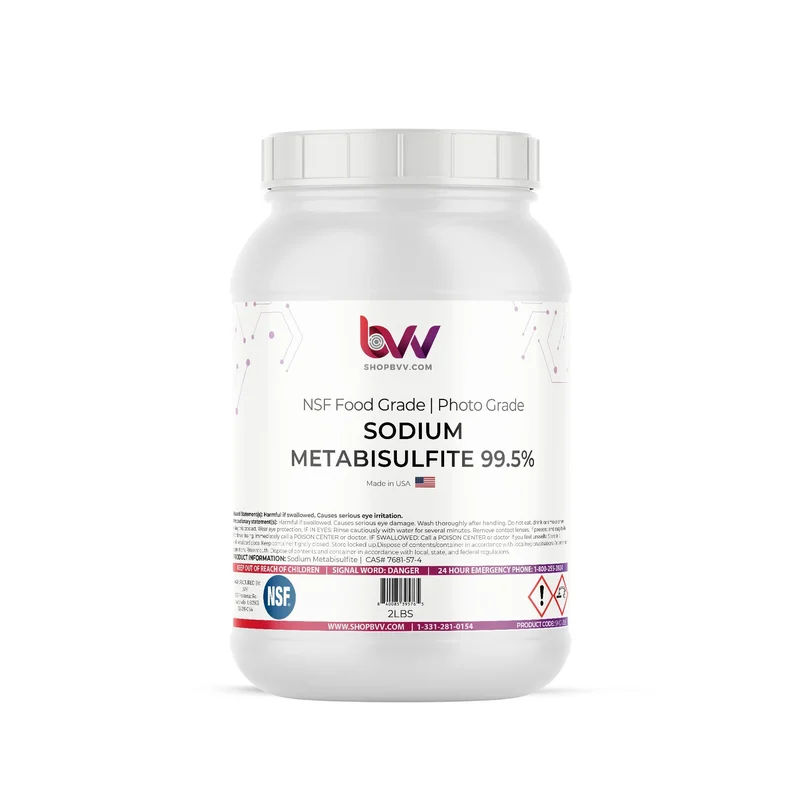
When purity, safety, and certification matter — whether you’re preserving wine, brewing beer, processing food, treating water, or working in a laboratory setting — BVV’s NSF-Certified Sodium Metabisulfite delivers the verified quality professionals demand. This fine white crystalline powder is independently certified by NSF International, recognized by health departments, government agencies, and industry associations worldwide. Available in 2 lb, 5 lb, 10 lb, and 50 lb sizes to suit home hobbyists and commercial operations alike.
Why Sodium Metabisulfite NSF-Certified
Not all sodium metabisulfite is created equal. BVV’s sodium metabisulfite carries NSF certification — meaning it has been independently tested and verified for safety, sanitation, and quality by one of the most respected third-party certification bodies in the world. This matters enormously in food, beverage, and water treatment applications where product purity directly impacts safety and compliance. Many generic or industrial-grade sodium metabisulfite products lack this independent verification, leaving users to rely solely on manufacturer claims.
BVV’s NSF-certified formula is backed by a publicly available Certificate of Analysis (COA) and Safety Data Sheet (SDS), giving buyers full transparency into what they’re working with. Whether you’re a home winemaker, a commercial brewer, a food processor, or a water treatment professional, this is the grade of sodium metabisulfite you can trust for consistent, compliant, and effective results.
Key Benefits
- NSF Certified for Safety & Purity – Independently verified by NSF International, recognized by health departments, government agencies, and industry associations for food and water contact applications.
- Effective Antioxidant & Preservative – Prevents oxidation in wines, beers, juices, and food products, extending shelf life and preserving flavor, color, and freshness.
- Antimicrobial & Sanitizing Agent – Kills unwanted bacteria, wild yeast, and mold on equipment and surfaces, making it essential for sanitation in brewing and food processing environments.
- Chloramine & Chlorine Neutralizer – Rapidly neutralizes chlorine and chloramines in tap water, making it ideal for water treatment and pre-treatment in brewing and food production.
- Versatile Multi-Industry Use – Suitable for winemaking, brewing, food preservation, water treatment, photography, and laboratory applications.
- Fine Crystalline Powder – Dissolves quickly and evenly in water for consistent, reliable dosing across all applications.
- Full Documentation Available – Backed by a publicly available Certificate of Analysis (COA) and Safety Data Sheet (SDS) for complete transparency and compliance documentation.
- Multiple Size Options – Available in 2 lb, 5 lb, 10 lb, and 50 lb sizes to suit home hobbyists, small producers, and commercial operations.
Use Cases
- Winemaking – Sulfite Addition & Preservation – Used to add sulfur dioxide (SO₂) to wine must and finished wine to prevent oxidation, inhibit wild yeast and bacteria, and preserve color, aroma, and flavor throughout fermentation and aging.
- Homebrewing & Commercial Brewing – Equipment Sanitation – Dissolved in water to create a sanitizing solution for cleaning fermenters, kegs, bottles, tubing, and other brewing equipment before use.
- Water Treatment – Chlorine & Chloramine Removal – Added to tap water to neutralize chlorine and chloramines before use in brewing, food processing, or aquaculture applications where these disinfectants would otherwise interfere with fermentation or product quality.
- Food Preservation & Processing – Used as an antioxidant and preservative in dried fruits, seafood, fruit juices, and other food products to prevent browning, spoilage, and microbial contamination.
- Laboratory & Industrial Reagent – Serves as a reducing agent and oxygen scavenger in laboratory settings, chemical synthesis, and industrial processes requiring controlled oxidation-reduction reactions.
- Photography & Darkroom Processing – Used in photographic developing solutions as a preservative and antioxidant to extend the working life of developer chemistry.
Directions for Use
- Winemaking (SO₂ Addition): Dissolve the appropriate measured quantity in a small amount of water before adding to must or wine. Typical addition rates vary by application — consult a winemaking reference or your COA for specific dosing guidance based on desired SO₂ levels.
- Equipment Sanitation (Brewing/Winemaking): Dissolve approximately 1–2 oz per gallon of water to create a sanitizing rinse solution. Apply to clean equipment surfaces, allow contact time, then drain. No rinse required at standard concentrations — verify with your specific application guidelines.
- Water Dechlorination: Add a small measured quantity to tap water and stir to dissolve. A small amount (approximately ¼ teaspoon per 10 gallons) is typically sufficient to neutralize chlorine; chloramine removal may require slightly higher doses. Allow a few minutes for the reaction to complete before use.
- Food Preservation: Use only at approved concentrations per applicable food safety regulations. Consult the COA and SDS for purity specifications and refer to regulatory guidelines for permitted use levels in your specific food application.
- Safety: Always wear gloves and eye protection when handling. Work in a well-ventilated area as dissolved sodium metabisulfite releases sulfur dioxide gas. Refer to the SDS for full safety handling instructions before use.
- Storage: Store in a cool, dry, well-ventilated location in a tightly sealed container away from moisture, heat, and incompatible materials. Keep out of reach of children.
Ingredients / Guaranteed Analysis
- Sodium Metabisulfite (Na₂S₂O₅) – White crystalline powder, NSF-certified food and water contact grade
- Purity: High-purity grade — refer to the Certificate of Analysis (COA) for exact assay values and lot-specific specifications
- NSF Certification: Independently verified by NSF International for safety, sanitation, and quality
Derived from inorganic chemical synthesis. Manufactured in the USA. Full COA and SDS available for download.
What Growers Are Saying
“I’ve been using this for water treatment in my irrigation system and the NSF certification gives me complete confidence in what I’m putting near my crops. Dissolves instantly and works exactly as expected.”
— Marcus T., Commercial Grower
“We use this for equipment sanitation in our processing facility. The COA documentation makes compliance reporting straightforward and the product is consistently high quality batch after batch.”
— Sarah P., Greenhouse Grower
“As a home winemaker I’ve tried several brands and BVV’s NSF-certified version is the one I trust. Clean, pure, and the documentation is right there if I ever need it.”
— Daniel R., Home Grower
Frequently Asked Questions
What does NSF certification mean for sodium metabisulfite?
NSF International is an independent, accredited organization that tests and certifies products for safety, sanitation, and quality. NSF certification for sodium metabisulfite means the product has been independently verified to meet strict purity and safety standards for food and water contact applications — not just self-reported by the manufacturer. This certification is recognized by health departments, government agencies, and industry associations.
What is sodium metabisulfite used for in winemaking and brewing?
In winemaking, sodium metabisulfite is used to add sulfur dioxide (SO₂) to must and finished wine, which prevents oxidation, inhibits wild yeast and bacteria, and preserves the wine’s color, aroma, and flavor. In brewing, it’s primarily used as a sanitizing agent for equipment and to neutralize chlorine and chloramines in tap water before use in the brewing process.
How is sodium metabisulfite different from potassium metabisulfite (Campden tablets)?
Both compounds release sulfur dioxide and serve similar functions in winemaking and brewing. Sodium metabisulfite contains sodium rather than potassium, which may be a consideration for those monitoring sodium intake. Potassium metabisulfite (often sold as Campden tablets) is more commonly used in home winemaking, while sodium metabisulfite is widely used in commercial food processing and water treatment. Both are effective — the choice often comes down to application and personal preference.
Is this safe for food and beverage contact applications?
Yes. BVV’s sodium metabisulfite is NSF-certified for food and water contact applications, meaning it has been independently verified to meet applicable safety and purity standards. Always use at approved concentrations per applicable food safety regulations and refer to the COA and SDS for full specifications.
Which size should I buy?
The 2 lb bag is ideal for home winemakers, homebrewers, or those trying the product for the first time. The 5 lb and 10 lb options suit regular hobbyists or small-scale producers. The 50 lb bag offers the best value per pound for commercial operations, food processors, or water treatment applications with high-volume needs.
How should I store sodium metabisulfite?
Store in a cool, dry, well-ventilated location in a tightly sealed container. Keep away from moisture, heat, direct sunlight, and incompatible materials (such as strong acids or oxidizers). Exposure to moisture or air will cause gradual degradation and loss of potency. Properly stored, it maintains its effectiveness for an extended period.
More about Sodium Metabisulfite NSF-Certified:
Sodium Metabisulfite has many major and niche uses. It is widely used for preserving food and beverages, and as a laboratory reagent. It is a white crystalline powder.
Our Sodium Metabisulfite is NSF® Certified.NSF-certified means a product was independently verified for safety, sanitation, and quality by NSF. NSF certification is recognized by health departments, government agencies, and industry associations.
Sodium Metabisulfite NSF Certified – Certificate of Analysis (COA)
Sodium Metabisulfite NSF Certified – Safety Data Sheet (SDS)
Reviews
There are no reviews yet.